 Chinese
 English
Customer Service Telephone Numbers
15841296000
15841296000
|
New Chinese style
product
(4)
product
(6)
product
(8)
product
(4)
Living room decoration
(0)
European style
engrave
(4)
engrave
(4)
engrave
(0)
other
Background add
(0)
|
sundial 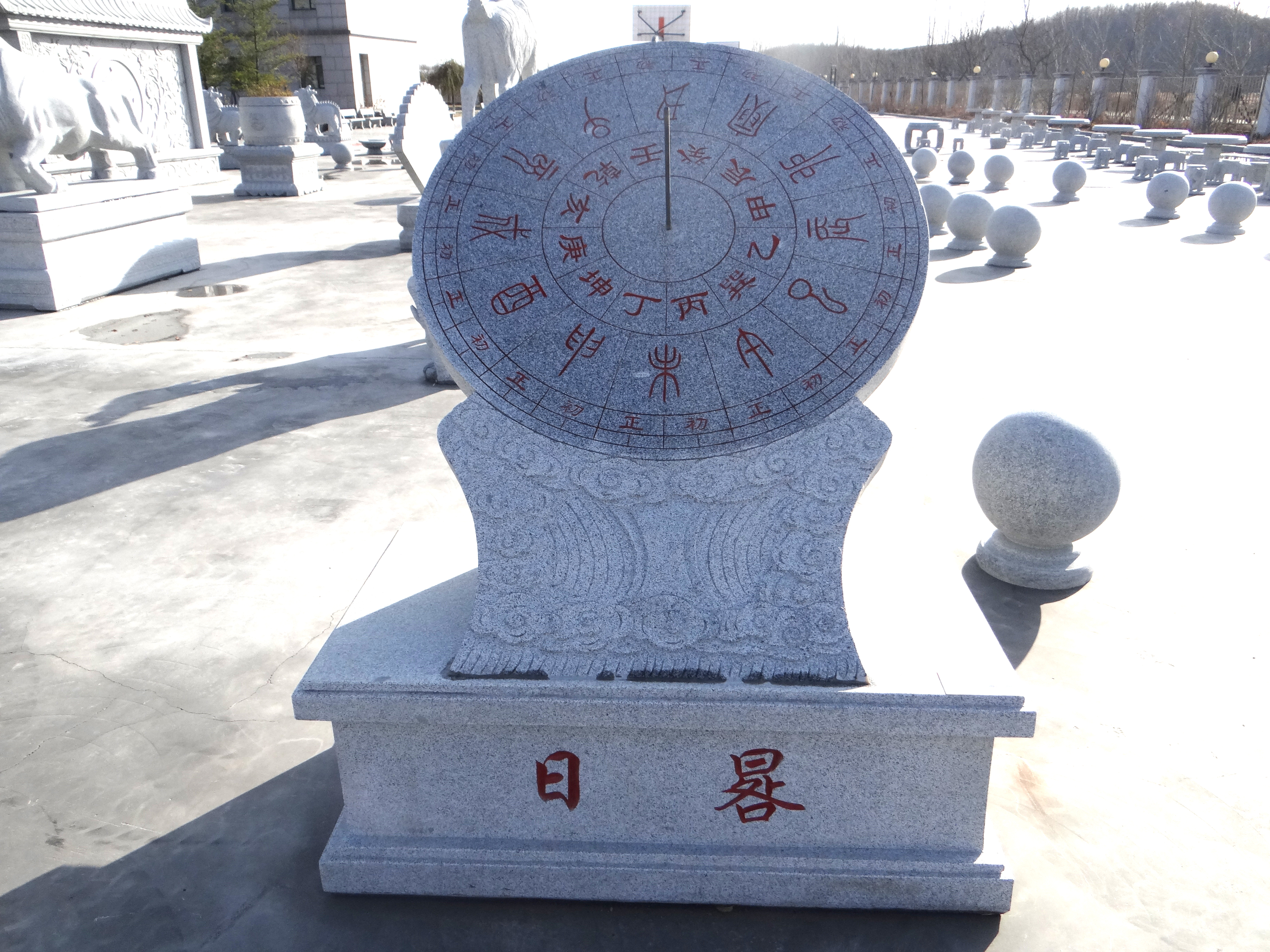 Description
A sundial, also known as a "sundial", refers to an ancient time measuring instrument that used the changes in the position of the sun's shadow to measure time. The "sun" refers to the "sun", and the "sundial" represents the "shadow", which refers to the shadow of the sun. Its principle is to use the projection direction of the sun to determine and divide time. It usually consists of a sundial needle (watch), a dial face (a dial base with scales), and a base. Common forms include horizontal sundials and equatorial sundials. A sundial uses the direction of the sun's projection to measure time. When the sun shines on the sundial, the shadow of the pointer is cast onto the dial surface, and the shadow of the pointer slowly moves from west to east. The time it takes for the shadow of the gnomon to move one inch on the dial is called "one inch of time", and the idiom "one inch of time, one inch of gold" comes from this. However, it will lose its effectiveness on rainy days and at night, and cannot be used during the Spring Equinox and Autumn Equinox periods. In ancient times, humans transmitted information about the passage of time through the shadows cast by the sun on the ground. The ancients transformed this natural phenomenon into a timekeeping tool. The sundial emerged as an important timekeeping instrument in ancient civilizations. The scale division of ancient Chinese sundials was precise, dividing a day into 100 divisions. The earliest recorded flat sundial in China is the "Short Shadow Peace Instrument" of the Sui Dynasty, and in terms of archaeological objects, such as the Han Dynasty sundial in Hohhot, it is also an early example of flat sundials. The popularity of the name "sundial" began in the Qing Dynasty. The most common type of sundial in ancient Europe was the vertical sundial, which hung on a vertical wall. The sundial carries human understanding and exploration of time. From ancient China, North Africa, Central Asia to Europe, the sundial has served as an important time tool, spanning different cultures and regions, showcasing human wisdom and innovation in pursuing timing accuracy. The development and evolution of sundials around the world reflect the historical process of humanity's endless exploration and profound understanding of time. Behind every sundial, there is a reverence and pursuit for the mysteries of nature and the universe.
|


Customer service micro signal Public wechat
- Tel:15841296000
- QQ:121403928
- E-mail:121403928@QQ.COM
- Add:liaoningsheng anshanshi xiuyan manzhuzhizixian xindianzhen
Advisory

 |
 Mobile version |
